
Board-Certified Allergist & Immunologist
Blog
Podcast
Podcast
Understanding Mast Cells, MCAS, Histamine, and the Search for Answers
Learn the differences between mast cells, MCAS, mastocytosis, and histamine intolerance—and why context matters when evaluating unexplained symptoms.

September 13, 2026
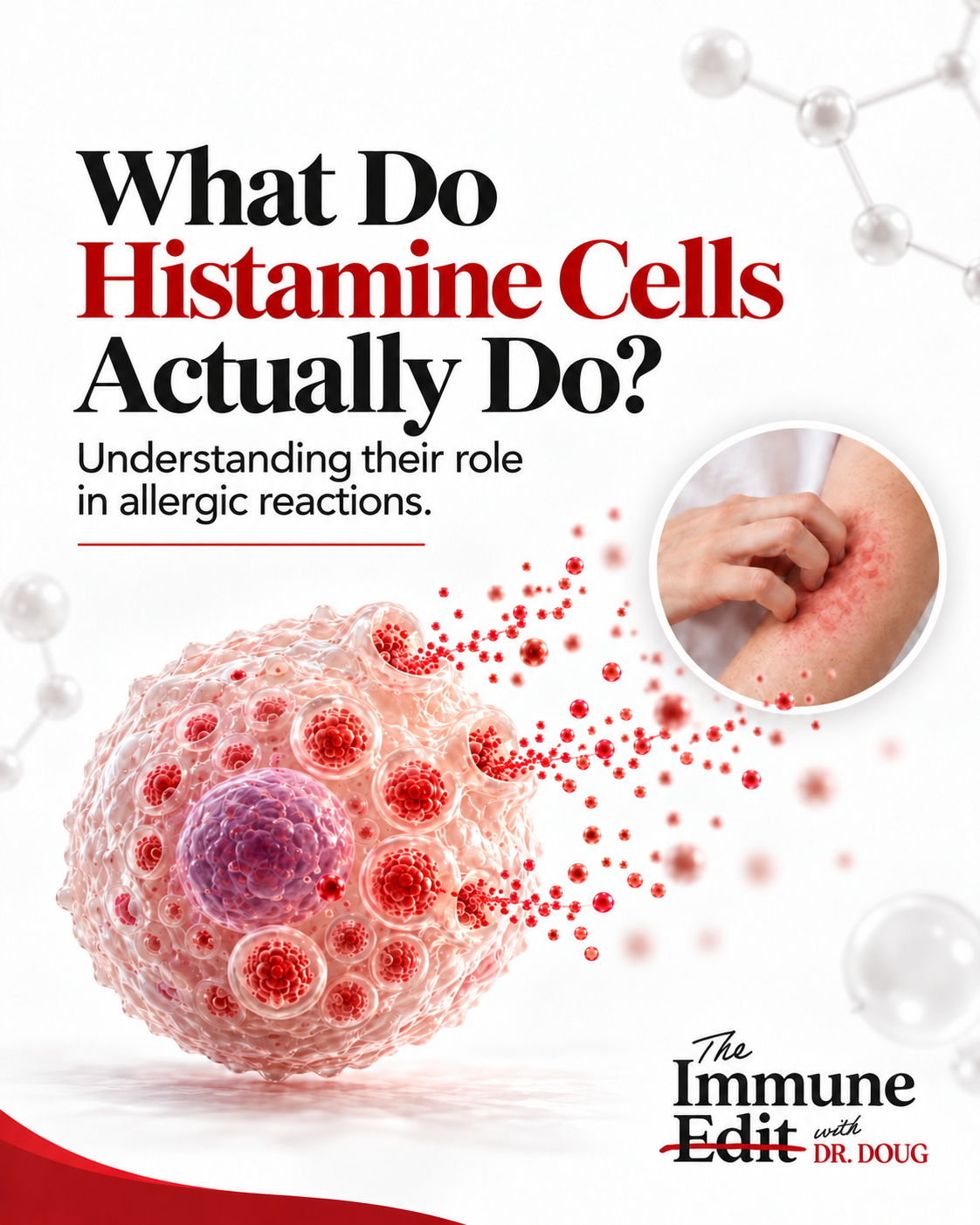
If you've spent time searching online for answers to symptoms like fatigue, brain fog, flushing, digestive problems, dizziness, palpitations, rashes, food reactions, or unexplained episodes of feeling unwell, you've probably encountered the same terms repeatedly:
Mast cells. MCAS. Histamine. Histamine intolerance. DAO. Mastocytosis.
These terms are everywhere online, often presented as if they offer one simple explanation for a wide range of complex symptoms.
The reality is more nuanced.
Mast cell disorders are real. Some people experience genuine mast cell-related disease and may spend years searching for answers before receiving appropriate evaluation and care. At the same time, not every unexplained symptom is caused by mast cells, and not every symptom that overlaps with mast cell-related conditions belongs to the same diagnosis.
Both things can be true.
Understanding the difference matters because people who are struggling deserve more than dismissal—but they also deserve more than oversimplified explanations, unnecessary testing, and treatments promoted with more confidence than evidence.
Why Mast Cells Have Become Such a Popular Explanation Online
Mast cells have become a major topic in online health conversations because they can seem to explain almost everything.
People with chronic or unexplained symptoms may experience problems involving multiple parts of the body. Their symptoms may fluctuate. Testing may not always provide clear answers. They may react differently from one day to the next.
That uncertainty can be frustrating.
When someone online offers a confident explanation that appears to connect all those symptoms together, it can feel incredibly validating.
But an explanation that feels satisfying is not automatically the correct explanation.
Symptoms such as fatigue, brain fog, digestive discomfort, flushing, dizziness, palpitations, anxiety, sleep disruption, and food-related symptoms can occur for many different reasons. Some may involve mast cell activity. Others may not.
The goal should not be to force every symptom into a single explanation.
The goal is to understand what is actually happening, why it may be happening, and what evidence supports that conclusion.
What Are Mast Cells?
Mast cells are normal and important immune cells.
Everyone has them.
They are found throughout the body, particularly in areas that interact closely with the outside environment or other body systems, including the:
- Skin
- Gastrointestinal tract
- Airways
- Blood vessels
- Nervous system and surrounding tissues
Mast cells play an important role in immune responses and can release a variety of chemical mediators.
These include substances such as:
- Histamine
- Tryptase
- Leukotrienes
- Prostaglandins
- Cytokines
These chemicals can affect different tissues and contribute to symptoms depending on where they are released and how the body responds.
However, mast cells are not simply an on-and-off switch.
Different signals can activate mast cells in different ways. Different triggers may lead to the release of different mediators, and those mediators may produce different symptoms.
That complexity is one reason mast cell-related conditions can be difficult to understand.
Mast Cell Activation Is Not the Same in Everyone
When mast cells become activated, they can release chemical mediators that affect different parts of the body.
Because mast cells are present in multiple tissues, symptoms can potentially involve several organ systems.
Some people may experience symptoms involving the skin, such as:
- Flushing
- Itching
- Hives
- Swelling
Others may experience gastrointestinal symptoms, including:
- Abdominal discomfort
- Nausea
- Reflux
- Other digestive symptoms
Symptoms may also involve the cardiovascular or respiratory systems, including episodes of:
- Rapid heart rate
- Lightheadedness
- Dizziness
- Breathing symptoms
In some cases, severe mast cell activation can contribute to anaphylaxis.
But symptom variability alone does not establish a diagnosis.
The pattern, timing, severity, triggers, associated symptoms, and overall clinical context all matter.
What Is Mast Cell Activation Syndrome (MCAS)?
Mast Cell Activation Syndrome, commonly called MCAS, refers to a condition involving inappropriate or excessive mast cell activation.
In simple terms, the issue is not necessarily that a person has too many mast cells. Rather, mast cells may be releasing mediators in a way that contributes to recurrent symptoms.
Symptoms can vary significantly from person to person.
Some individuals may experience relatively mild or intermittent episodes, while others may have recurrent and more severe symptoms involving multiple body systems.
This variability is part of what makes MCAS challenging to discuss online.
A person experiencing flushing, hives, digestive symptoms, dizziness, or rapid heart rate may wonder whether mast cells are involved. But those symptoms can also occur in many other conditions.
That is why a diagnosis requires more than recognizing a list of symptoms on social media.
Mastocytosis Is Different From MCAS
Another term frequently discussed alongside MCAS is mastocytosis.
Although the names sound similar, mastocytosis and MCAS are not the same condition.
Mastocytosis involves an abnormal accumulation or increased number of mast cells.
In other words, the issue is not simply how mast cells are behaving. There may actually be an increased number of these cells in the body.
Mastocytosis itself exists on a spectrum and can include different forms, such as:
- Cutaneous mastocytosis
- Systemic mastocytosis
- More indolent forms
- More aggressive and advanced forms
These conditions require appropriate medical evaluation and should not be confused with generalized symptom descriptions found online.
Not every episode of flushing is mastocytosis.
Not every unexplained symptom is MCAS.
And not every person with symptoms involving histamine has either condition.
What About Histamine Intolerance?
Histamine intolerance is another term that is frequently grouped together with mast cell disorders.
But histamine intolerance is not the same as MCAS or mastocytosis.
The term generally refers to difficulty metabolizing or clearing histamine appropriately.
One enzyme commonly discussed in this context is diamine oxidase (DAO), which is involved in the metabolism of histamine in certain parts of the body.
However, the presence of symptoms associated with histamine does not automatically mean that a person has histamine intolerance.
Likewise, taking a DAO supplement is not a universal solution for symptoms involving flushing, digestive problems, headaches, or other nonspecific complaints.
Different biological mechanisms require different approaches.
Can These Conditions Overlap?
Yes, overlap can occur.
A person may have more than one biological process contributing to their symptoms.
For example, someone may have mast cell activation while also having difficulty with histamine metabolism.
But overlap does not mean that these conditions are identical.
That distinction is important.
MCAS, mastocytosis, and histamine intolerance involve different biological concepts, different mechanisms, and different diagnostic considerations.
Treating them as interchangeable can create confusion and lead people toward treatments that may not address the actual cause of their symptoms.
Why Laboratory Testing Can Be Complicated
Online discussions often make medical testing sound simple:
Positive test = confirmed diagnosis.
Normal test = nothing is wrong.
In reality, neither statement is always accurate.
Mast cell biology is complex.
Different mast cell mediators may be released at different times and in different tissues. Some activation may occur locally rather than producing measurable changes in the bloodstream or urine.
That means laboratory testing must be interpreted carefully and in context.
A test result is one piece of information.
It should be considered alongside:
- Symptoms
- Timing of episodes
- Clinical history
- Patterns over time
- Potential triggers
- Physical findings
- Other medical conditions
- Additional testing when appropriate
A normal laboratory result does not automatically mean that a person's symptoms are imaginary or unimportant.
At the same time, an abnormal result does not automatically explain every symptom a person experiences.
The goal is to understand the whole person, not simply react to an isolated laboratory value.
Why Symptoms Can Look Different From One Person to Another
Mast cell-related symptoms can vary considerably.
One person may experience primarily skin symptoms. Another may experience gastrointestinal symptoms. Someone else may experience a combination of symptoms involving several systems.
The same person's symptoms may also change over time.
Factors that may influence symptoms can include:
- Stress
- Infection
- Sleep
- Hormonal changes
- Exercise
- Temperature
- Environmental exposures
- Foods
- Nervous system activity
- Baseline health
This does not mean that every change in symptoms is caused by mast cells.
It means that human biology is dynamic.
Context matters.
The Problem With One-Size-Fits-All Explanations
One of the biggest problems with online health content is the pressure to find a single explanation for everything.
People are often told:
"It's your histamine."
"Your mast cells are activated."
"This supplement will fix it."
"This one test will give you the answer."
Complex medical problems rarely work that way.
A person can have real symptoms without yet knowing the exact cause.
Someone may have been dismissed by previous healthcare providers and still encounter inaccurate information online.
A confident explanation can make someone feel seen—but feeling understood is not always the same as being accurately guided.
Patients deserve compassion.
They also deserve careful reasoning.
Why Fear Makes These Conversations Even Harder
Living with unpredictable symptoms can be frightening.
When the body begins to feel unpredictable, people naturally search for explanations that provide certainty.
Online health content often takes advantage of that uncertainty by offering simple answers to complicated problems.
But fear can make certainty feel more convincing than it actually is.
That does not mean people who are searching for answers are naïve or unintelligent.
It means they are human.
When someone has been suffering, dismissed, or left without clear answers, they may be especially vulnerable to anyone who promises to finally explain everything.
That is why it is important to approach complex health information carefully.
Ask:
- What is the evidence?
- Does this explanation fit the pattern of symptoms?
- What else could explain what is happening?
- Is this claim based on clinical evidence or personal anecdotes?
- Is someone selling a test, supplement, or proprietary treatment alongside their explanation?
Healthy skepticism does not mean dismissing symptoms.
It means protecting people from explanations that may be incomplete, misleading, or unsupported.
Understanding Symptoms Without Fearing Them
There is an important difference between trying to understand symptoms and becoming afraid of every sensation in the body.
Constantly monitoring the body for signs of danger can make symptoms feel more overwhelming and may increase anxiety around normal or fluctuating physical sensations.
This does not mean symptoms are "all in your head."
It means the experience of symptoms is influenced by many factors, including the body's physiology, stress response, sleep, environment, nervous system, and overall health.
Humans are not isolated laboratory values.
We are complex biological systems.
The best approach is not to ignore symptoms—but also not to assume that every symptom has the same explanation.
The Importance of a Thoughtful Evaluation
If you are concerned that mast cells, histamine, or another immune-related process may be contributing to your symptoms, a thoughtful medical evaluation is important.
The goal should be to understand:
- What symptoms are occurring?
- When do they occur?
- Is there a consistent pattern?
- Are there identifiable triggers?
- Which body systems are involved?
- How long have the symptoms been present?
- What testing has already been performed?
- What other explanations should be considered?
A good evaluation does not begin by assuming the answer.
It begins by asking better questions.
Sometimes mast cells may be part of the explanation.
Sometimes another condition may better explain the symptoms.
Sometimes more than one process may be involved.
And sometimes the answer takes time.
The Immune Edit: Context Matters More Than Internet Certainty
Mast cells are real and important immune cells.
Mast cell disorders are real.
MCAS, mastocytosis, and problems involving histamine metabolism are not all the same thing.
Some people with genuine mast cell-related conditions have spent years being dismissed.
Others may be encouraged online to interpret every symptom through a mast cell lens when another explanation may be more accurate.
Both realities can exist at the same time.
The answer is not dismissal.
And it is not blind certainty.
It is careful evaluation.
When it comes to complex symptoms, the most helpful question is often not:
"What's the one thing causing everything?"
Instead, ask:
"What does the evidence show, and what else could explain what I'm experiencing?"
Understanding your symptoms is different from fearing your symptoms.
And context matters more than internet certainty.
Frequently Asked Questions
Are mast cells normal?
Yes. Mast cells are normal immune cells found throughout the body. They play important roles in immune responses and release chemical mediators that can affect different tissues.
What is the difference between MCAS and mastocytosis?
MCAS involves inappropriate or excessive mast cell activation. Mastocytosis involves an abnormal accumulation or increased number of mast cells. They are different conditions with different diagnostic considerations.
Is histamine intolerance the same as MCAS?
No. Histamine intolerance is generally discussed as difficulty metabolizing or clearing histamine appropriately, while MCAS involves mast cell activation. The two concepts are not interchangeable, although overlap may occur in some situations.
Can mast cell disorders cause symptoms in different parts of the body?
Yes. Because mast cells are present in multiple tissues, mast cell activation can potentially contribute to symptoms involving the skin, gastrointestinal tract, respiratory system, cardiovascular system, and other areas.
Can a normal test rule out all mast cell-related problems?
Not necessarily. Laboratory testing must be interpreted in the context of symptoms, timing, clinical history, and other relevant information. A normal result should not automatically be interpreted as proof that a person's symptoms are not real.
Should I take DAO supplements for symptoms I think are related to histamine?
DAO supplements are not a universal treatment for unexplained symptoms. Because symptoms involving flushing, digestive problems, headaches, or other complaints can have many causes, it is important to understand the underlying problem before assuming a particular supplement is appropriate.
How can I tell whether my symptoms are caused by mast cells?
Symptoms alone cannot reliably confirm a mast cell-related condition. A healthcare professional can evaluate your medical history, symptom patterns, potential triggers, and appropriate testing to determine whether mast cells may be contributing to your symptoms.
What should I do if I have persistent or unexplained symptoms?
If you have ongoing, recurrent, or concerning symptoms, speak with a qualified healthcare professional. A thoughtful evaluation can help identify potential causes and determine whether further testing or specialist care is appropriate.
Medical Disclaimer: This article is provided for educational purposes only and is not a substitute for individualized medical advice, diagnosis, or treatment. If you have concerning or persistent symptoms, seek care from a qualified healthcare professional.