
Board-Certified Allergist & Immunologist
Blog
Podcast
Podcast
Allergy Emergency Preparedness: Turning Your Action Plan Into Action
Learn how clear, accessible food allergy emergency plans can help families, schools, and caregivers respond quickly and confidently when reactions occur.

September 4, 2026
.PNG)
Preparing for an allergic emergency is about more than having epinephrine available. It is about knowing what to do, knowing when to act, and making sure the right information is accessible when it matters most.
For people living with food allergies and other conditions that can cause severe allergic reactions, back-to-school season is a particularly important time to review emergency plans. Families may need updated forms, prescriptions, medication, and instructions for schools, camps, caregivers, and other people responsible for their safety.
Yet an emergency plan is only useful if people can actually find it, understand it, and act on it.
Why Allergy Emergency Preparedness Matters
Anaphylaxis can develop quickly and requires prompt treatment. For someone at risk, having epinephrine readily available is an important part of emergency preparedness.
But medication alone is not the entire plan.
Patients, parents, caregivers, teachers, school nurses, and other responsible adults need to understand:
- What symptoms may indicate anaphylaxis
- When epinephrine should be used
- How to administer epinephrine
- What additional steps should be taken after treatment
- When emergency medical services should be contacted
- Where the person's emergency action plan and medications are located
These details become especially important when a child spends time away from home.
The Challenge of Paper-Based Action Plans
For years, allergy emergency plans have often relied on paper forms.
The process can be cumbersome. Families may need to schedule appointments, have forms completed and signed, obtain prescriptions, deliver paperwork to schools or camps, and repeat much of the process each year.
Once completed, however, the plan may end up somewhere it is difficult to access—perhaps in a school nurse's office, a binder, or a filing cabinet.
A document can be medically appropriate and still be difficult to use in the moment.
This is one reason allergy preparedness needs to focus not only on creating an emergency plan, but also on making that plan actionable.
From an Emergency Plan to an Actionable Tool
Digital technology creates opportunities to make emergency information easier to access and manage.
A digital platform can connect several parts of the process rather than simply turning a paper document into a digital file.
For example, an allergy action plan platform can help organize information between patients, healthcare providers, schools, camps, and caregivers. Instead of relying on families to keep track of every step manually, the system can help show where a plan is in the process—from completion by the family to review by a healthcare provider and delivery to a school or camp.
This type of organization can help reduce some of the administrative barriers that make emergency preparedness difficult.
Having the Plan With You Matters
One advantage of digital access is availability.
Most people keep their phones close at hand throughout the day. An emergency plan that can be accessed from a phone may be easier to retrieve than a paper document stored somewhere else.
QR codes can provide another way to quickly access relevant emergency information. Rather than searching through paperwork, a person can scan a code and be directed to the appropriate plan.
The goal is not to replace medical care or emergency medication. Instead, the goal is to make important information easier to access when it is needed.
Knowing When to Use Epinephrine
For people at risk of anaphylaxis, understanding when and how to use epinephrine is a critical part of preparedness.
One of the challenges in an emergency is hesitation. People may be uncertain whether symptoms are severe enough, may be afraid of using epinephrine, or may worry about what happens afterward.
That uncertainty can create dangerous delays.
An individualized emergency action plan should provide clear instructions based on the patient's medical history and the guidance of their healthcare professional.
It is important for patients and caregivers to understand their own plan before an emergency occurs—not while one is happening.
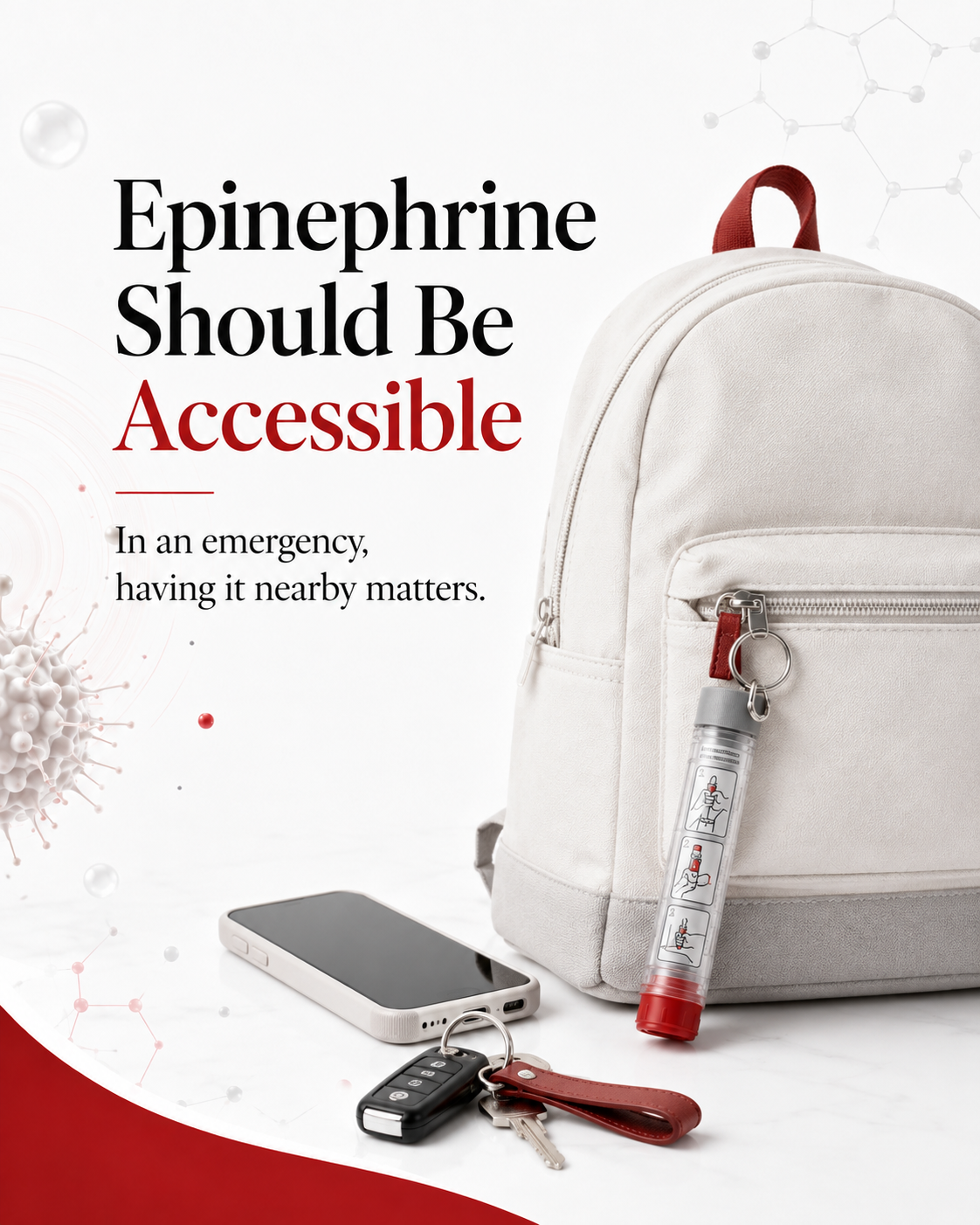
Epinephrine Is a Tool, Not Something to Fear
Epinephrine is the first-line treatment for anaphylaxis. It is administered intramuscularly, usually with an epinephrine auto-injector.
People who have been prescribed epinephrine should know where it is kept, how to use it, and what their healthcare professional has instructed them to do after administration.
One of the challenges in an emergency is hesitation. People may wait for symptoms to become more severe before using epinephrine. However, when anaphylaxis is suspected, epinephrine should be given promptly according to the person's emergency action plan rather than waiting for the reaction to worsen.
Emergency plans should also be reviewed regularly so that medications, instructions, and patient information remain current.
The reaction is the problem. Epinephrine is part of the solution. So, a better way to think about epinephrine is as an important tool for treating anaphylaxis.
Emergency Plans Need to Account for Different Ages
Allergic reactions do not always present in exactly the same way across different age groups.
Infants and young children may not be able to describe symptoms in the same way as older children or adults. Their caregivers therefore need age-appropriate guidance about what to look for and how to respond.
Digital tools can potentially incorporate age-specific guidance and update information as a child grows and make it easier for families and healthcare professionals to update the plan as a child's needs change.
The important principle is broader than any particular technology: an emergency plan should be understandable and appropriate for the person who will actually need to use it.
Schools Play an Important Role in Allergy Preparedness
Schools are an important part of emergency planning for children with food allergies, asthma, and other medical conditions.
School nurses and staff may need to manage emergency plans for many students. They also need to know which plans are current, whether required documentation has been completed, and where medications and instructions are located.
Preparedness becomes much more effective when the school has access to clear, current information and staff understand how to respond.
This is also why education matters.
Annual training can introduce staff to emergency medications, action plans, symptoms, and appropriate responses. However, information provided once a year can be difficult to retain.
Making emergency information easily accessible throughout the school year can provide an additional layer of preparedness.
Food Allergy Education Goes Beyond Anaphylaxis
Schools also have an opportunity to address the social challenges associated with food allergies.
Food allergy bullying can affect children and may involve teasing, intentional exposure to allergens, exclusion, or other harmful behavior.
Education can help school communities understand that food allergies are a medical condition and that taking them seriously is part of keeping students safe.
Preparedness therefore involves more than knowing where an epinephrine device is stored. It also involves creating an environment in which students with food allergies are understood and supported.
Preparedness Matters Beyond School
Emergency planning should not stop at the school doors.
Children and adults with food allergies may encounter potential allergens at camps, restaurants, sporting events, social gatherings, and while traveling.
Air travel presents another setting where preparedness is particularly important because passengers are away from their usual healthcare environment.
Having emergency medication available and knowing what to do can help reduce uncertainty when traveling.
For people who travel internationally, access to understandable allergy information can also become more complicated when language barriers are involved.
Digital tools may provide opportunities to make allergy information accessible in multiple languages and potentially help travelers communicate their allergies more clearly.
Removing Barriers Can Improve Preparedness
Emergency preparedness often breaks down because of small barriers.
A form may be incomplete. A signature may be missing. A prescription may need to be updated. A parent may not know whether a school received the plan. A school nurse may be trying to locate paperwork. A patient may not know exactly where their emergency instructions are.
None of these problems necessarily reflects a lack of concern.
They are often simply the result of a complicated system.
Reducing those barriers can make preparedness easier for everyone involved.
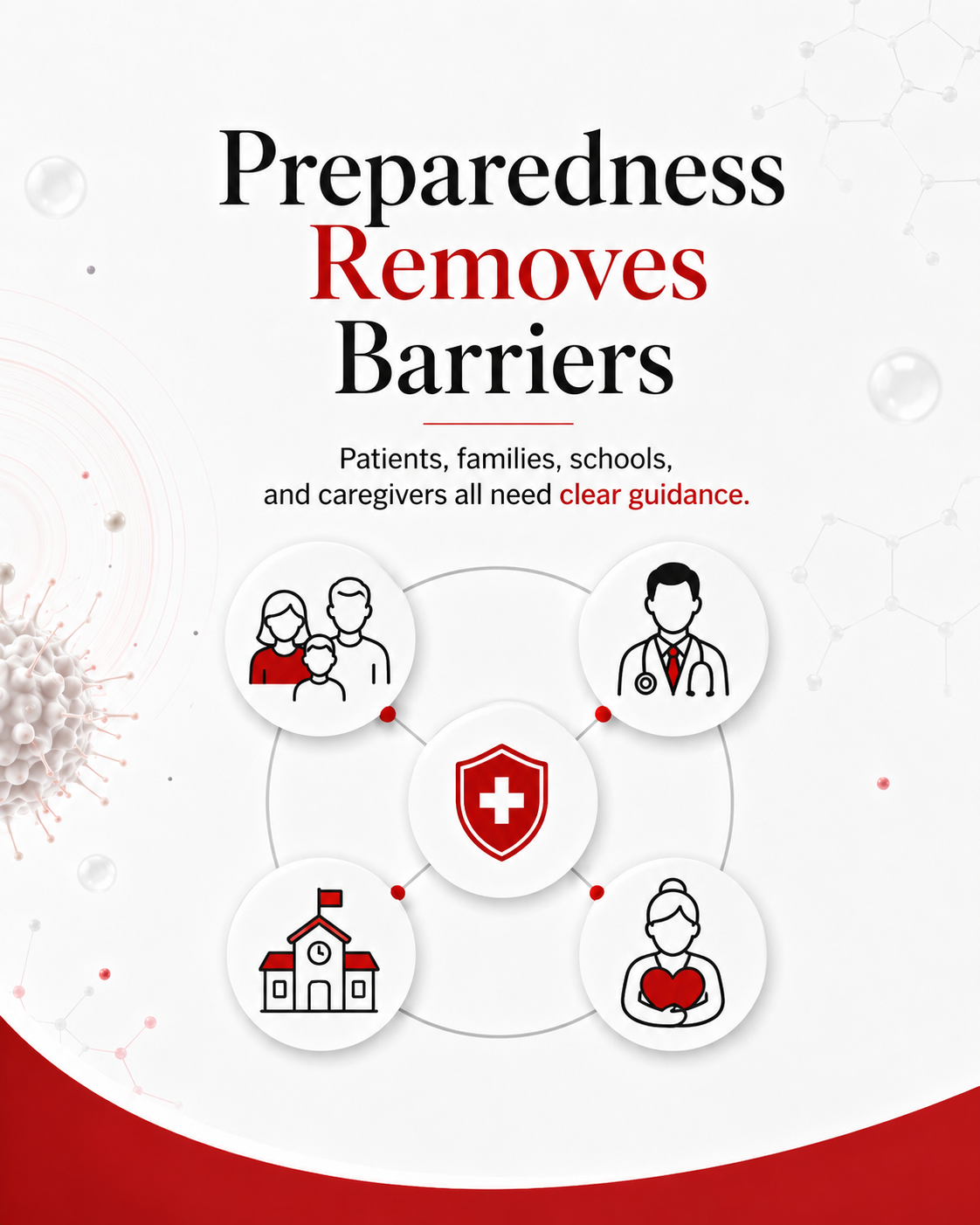
A well-designed system can help patients, healthcare providers, schools, and caregivers know what has been completed and what still needs attention.
Technology Should Support Good Medical Care
Digital tools can make emergency information more accessible, but technology does not replace individualized medical advice.
An allergy action plan should be developed with an appropriate healthcare professional based on the individual's medical history and needs.
Digital platforms can help organize and deliver that information, but they should complement—not replace—the relationship between patients and their healthcare team.
The same principle applies to emergency medication. Having a digital plan does not eliminate the need to have prescribed medications readily available.
Proper Prior Preparation Promotes Peak Performance
Good emergency preparedness begins before an emergency happens.
Rather than waiting until the first day of school, a family can review its plan in advance and make sure:
- Emergency medications are available and not expired
- Prescriptions are current
- The action plan reflects the patient's current needs
- Parents and caregivers understand the instructions
- School or camp staff have the necessary documentation
- People responsible for the child know where emergency medication is located
- Everyone involved understands when and how to respond
- Travel plans account for allergy-related needs
The exact requirements will vary depending on the individual, their condition, and their healthcare provider's recommendations.
The broader principle remains the same: proper prior preparation promotes peak performance.
Making Emergency Plans Truly Actionable
An emergency action plan should not simply exist.
It should be accessible, understandable, current, and usable.
For families managing food allergies, that may mean moving beyond a document that gets filed away and toward systems that keep emergency information readily available to the people who may need it.
Tools such as digital action-plan platforms can help organize this process by connecting patients, healthcare providers, schools, camps, and caregivers.
The ultimate goal is straightforward: reduce unnecessary barriers so that people are better prepared to respond when an allergic emergency occurs.
The Takeaway
Allergy emergency preparedness is not about expecting something to go wrong. It is about being ready if it does.
For people at risk of anaphylaxis, having epinephrine available is essential, but knowing when and how to use it is equally important. A clear emergency action plan can help patients, families, schools, and caregivers respond with greater confidence.
Whether the plan is accessed on paper or digitally, the most important thing is that it is current, accessible, understood, and actionable.
Preparation cannot eliminate every risk, but it can help remove avoidable barriers when every moment matters.
Frequently Asked Questions
What should an allergy emergency action plan include?
An allergy emergency action plan should provide individualized instructions about the person's known allergies, symptoms to watch for, emergency medication, when medication should be used, and what steps should follow. The specific plan should be developed with the person's healthcare professional.
Why is epinephrine important for people at risk of anaphylaxis?
Epinephrine is the first-line treatment for anaphylaxis. People who have been prescribed epinephrine should have it readily available and understand how and when their healthcare professional has instructed them to use it.
Should children with food allergies have an emergency plan at school?
Yes. Children with food allergies should have an appropriate emergency plan coordinated with their healthcare provider and school, according to applicable school policies and local requirements. Relevant staff should know how to recognize symptoms and respond according to the child's plan.
How often should an allergy action plan be reviewed?
An emergency action plan should be reviewed regularly and whenever there is a significant change in the person's allergies, medications, medical history, or treatment recommendations. Families should also check that medications are current and have not expired.
Can digital allergy action plans replace paper forms?
Digital tools can make allergy information easier to access and manage, but they do not necessarily replace paper documentation where a school, camp, healthcare provider, or local policy requires it. The important goal is to ensure that the appropriate people have access to a current and usable plan.
What should I do if I am unsure whether symptoms are anaphylaxis?
Follow the individualized emergency instructions provided by your healthcare professional. If you are concerned that someone is experiencing anaphylaxis, follow their emergency action plan and seek emergency medical assistance as directed. Do not rely on an online source to make a personalized diagnosis during an emergency.
Does allergy preparedness matter when traveling?
Yes. People with serious allergies should plan ahead for travel by carrying their prescribed emergency medications, keeping their action plan accessible, and considering how they will communicate their allergies in different settings or languages.
How can schools better prepare for students with food allergies?
Schools can improve preparedness by maintaining current emergency plans, ensuring appropriate staff know how to recognize and respond to allergic reactions, keeping emergency medications accessible according to school policy, and providing ongoing education about food allergies and emergency response.