
Board-Certified Allergist & Immunologist
Blog
Podcast
Podcast
Early Food Introduction When a Parent Has Food Allergies: Navigating Safety, Anxiety, and Preparation
Learn how parents with food allergies can approach early allergen introduction with preparation, reliable guidance, and support while managing anxiety.

September 20, 2026
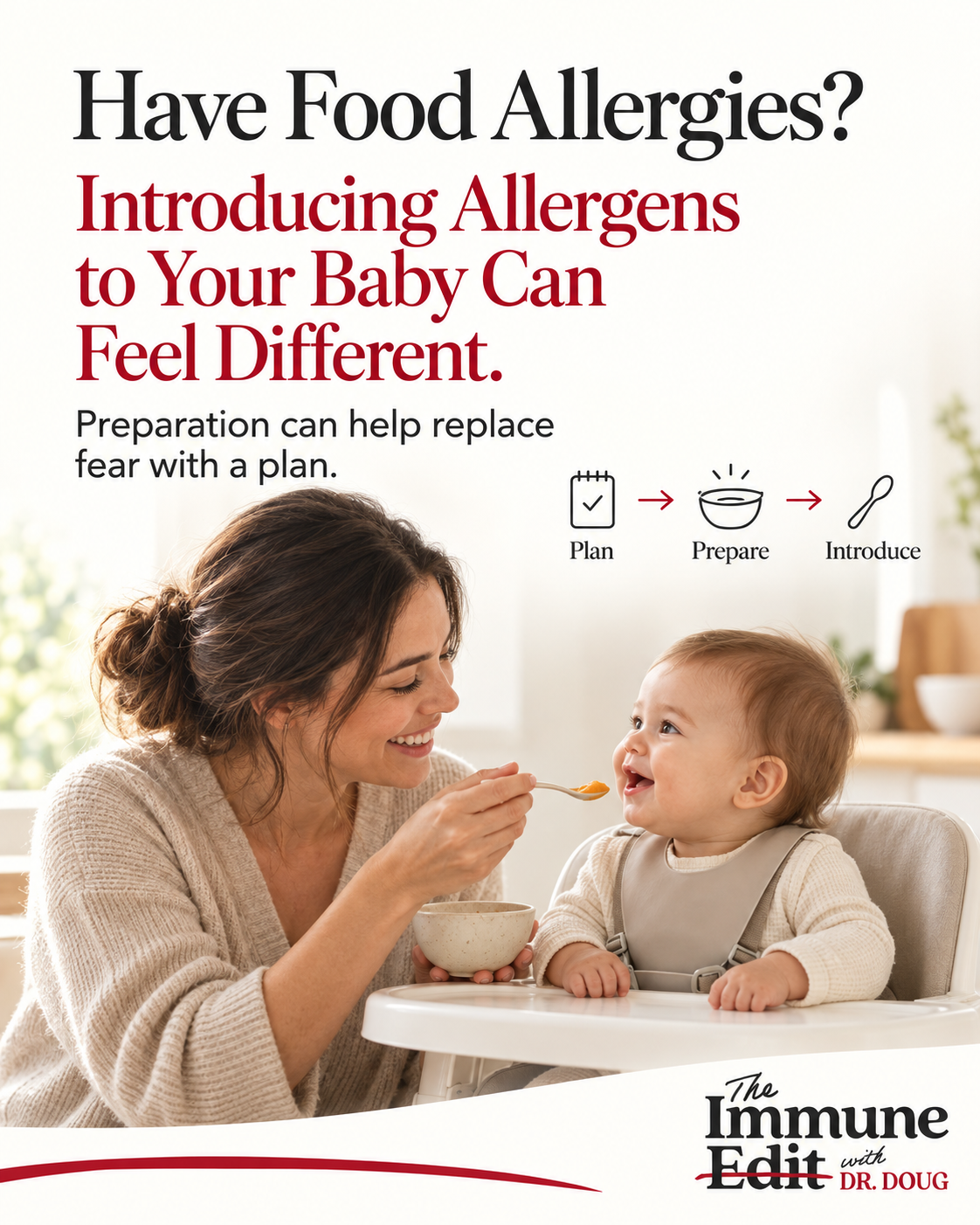
Introducing allergenic foods to an infant can feel very different when a parent has food allergies themselves.
For parents who have lived with food allergies for years, the idea of intentionally introducing an allergen to their baby can bring up a mix of emotions. There may be excitement about following current recommendations, but also fear about what could happen during that first exposure.
For Alli Bon, a lifelong food allergy advocate and content creator, this became a personal experience when she became a mother. After years of helping families navigate food allergies, travel, and dining out safely, pregnancy and early parenthood introduced a new set of questions.
How do you approach early food introduction when you have food allergies yourself? How can you prepare while also managing your own anxiety? And how can you make the process feel normal for your child?
These questions were at the center of a conversation on The Immune Edit with Dr. Doug Jones and Alli Bon.
Early Introduction Changed How We Think About Food Allergies
For many years, parents were often advised to delay introducing certain foods to young children.
That approach changed significantly following research such as the LEAP study, which helped shift thinking around early introduction of allergenic foods. The conversation moved away from routinely delaying exposure and toward introducing certain foods earlier as part of efforts to help prevent food allergies.
Today, early introduction is an important part of the conversation around food allergy prevention.
But what happens when the parent doing the introducing already has food allergies?
That question can make an already unfamiliar process feel much more complicated.
When the Parent Has Food Allergies
Alli has lived with food allergies her entire life. She also has experience with asthma, environmental allergies, and eczema.
Her father has food allergies as well, including nuts and fish, which are also among her own allergens. Because of that family history, she was naturally thinking about the possibility of food allergies in her daughter.
At the same time, she wanted to do what she could to support her daughter's health.
That created a difficult balance: following recommendations around early introduction while also thinking about her own safety.
For a parent who has never had to think about food allergies personally, introducing a potential allergen may feel straightforward.
For someone who has carried an epinephrine auto-injector throughout their life, the experience can feel very different.
Pregnancy Can Change the Perspective on Food Allergies
Alli described pregnancy as a period when her relationship with her own food allergies changed.
Before pregnancy, she had generally experienced little anxiety around her allergies for years. She was accustomed to managing them while traveling, dining out, and helping other people navigate similar situations.
Pregnancy introduced a new concern: what if she had an allergic reaction and it affected her baby?
She also experienced changes in her environmental allergies, asthma, and eczema during pregnancy, which added another layer to the experience.
This highlights something important about living with food allergies: the practical challenges may remain similar, but your perspective can change as your circumstances change.
Becoming a parent can introduce a completely new dimension to managing a condition you have lived with for years.
Breastfeeding Adds Another Layer to the Conversation
For Alli, early introduction was also connected to breastfeeding.
She wanted to understand how to safely introduce allergens to her daughter while continuing to breastfeed.
This raised practical questions that she had not previously needed to consider.
What happens if the breastfeeding parent has an allergic reaction?
How can a parent feel prepared while introducing allergens?
What happens if the parent is alone with the baby?
These questions can create anxiety even when the parent understands the importance of early introduction.
There may not always be many shared experiences online from people navigating this exact situation, which can make the process feel isolating.
Preparation Can Help Reduce Anxiety
One of Dr. Jones's central points during the conversation was the importance of preparation.
His personal approach to epinephrine is straightforward: he would rather someone have access to it and never need it than need it and not have it.
For parents who feel anxious about potential allergic reactions, having a plan can provide a greater sense of preparedness.
Preparation might include thinking through:
- Who will help with food introduction?
- When is the best time to introduce a new food?
- How can the parent remain safe during the process?
- What should happen if a reaction occurs?
- Who can provide support if anxiety becomes overwhelming?
The goal is not to predict every possible scenario.
It is to think through "if this happens, then what?"
That distinction matters.
Trying to account for every possible "what if" can become overwhelming. A practical plan focuses instead on what you would do if a particular situation actually occurred.
Having Support Can Make a Difference
Early food introduction does not necessarily have to be something a parent navigates alone.
In Alli's case, her husband does not have food allergies, which means he can potentially help with the process.
That support can be particularly valuable when the parent introducing allergens has their own allergies.
Support can come from different places, including:
- A spouse or partner
- A family member
- A trusted caregiver
- A pediatrician
- An allergist
- A counselor or therapist familiar with food allergy concerns
Having someone else who understands the plan can make the process feel less overwhelming.
Finding the Right Allergy Expertise
Another important part of the conversation was finding an allergist whose expertise matches your needs.
Alli explained that her existing allergist had been helpful with areas such as environmental allergies and allergy shots but did not provide the pediatric food allergy guidance she was looking for.
This does not necessarily mean that one healthcare professional is better than another.
Allergy and immunology is a broad field, and clinicians may develop particular areas of expertise.
Food allergy has also evolved rapidly over the last decade, including changes in how clinicians approach early introduction.
For families navigating complex food allergy questions, finding a healthcare professional with experience in food allergy and pediatric care may therefore be particularly useful.
Early Introduction Is Not the Same as Allergy Treatment
An important distinction discussed in the conversation is that early introduction for prevention is different from therapies such as oral immunotherapy.
The goal of early introduction is to incorporate allergenic foods into an infant's diet as part of a prevention approach.
It is not the same as administering a therapeutic dose through an oral immunotherapy protocol.
The conversation also emphasized thinking about continued exposure as part of the child's developing diet rather than approaching it like a medication that must be administered in a specific daily dose.
As a child's diet expands, many foods may naturally become part of regular meals and snacks.
Parents should still follow the individualized recommendations provided by their child's healthcare professional.
Managing Parental Anxiety Matters Too
One of the most relatable parts of Alli's story was how becoming a mother changed the way she experienced food allergy anxiety.
She had spent years helping other people travel and dine out safely with food allergies. She was accustomed to managing her own allergies.
But suddenly, she was responsible for another person.
That created new situations she had never considered before.
For example, she described being hesitant to eat an unfamiliar food while alone with her daughter because she worried about having a reaction while caring for her.
These are not simply medical questions.
They are lifestyle questions.
And for parents living with food allergies, those questions deserve attention too.
Don't Ignore the Emotional Side of Food Allergies
Managing food allergies involves more than knowing what foods to avoid or carrying an epinephrine auto-injector.
There can also be fear, uncertainty, and anxiety—particularly when circumstances change.
Dr. Jones emphasized that seeking counseling or professional support can be a useful part of navigating these challenges.
Food allergy-related anxiety does not have to be handled alone.
A counselor or therapist familiar with food allergies may be able to help parents develop strategies for managing anxiety while also creating a healthier environment for their children.
This is especially important for parents who want to avoid unintentionally passing their own fears onto their children.
Creating a Calm Feeding Environment
Alli reflected on how her own parents handled her food allergies when she was growing up.
She felt that they did not display significant anxiety around her allergies, and she believed that helped shape her own relationship with food allergy management.
Now, as a mother, she wants to create a similar environment for her daughter.
That does not mean pretending that food allergies are not serious.
Instead, it means learning how to distinguish appropriate preparation from constant fear.
A parent can take food allergies seriously while still allowing feeding to feel like a normal part of childhood.
That balance may take practice.
Focus on What You Can Control
One of Alli's main takeaways was to focus on what you can control.
For people living with food allergies, there are many practical things within their control, such as:
- Carrying prescribed epinephrine
- Checking food ingredients
- Bringing safe food when traveling
- Cleaning a space when appropriate
- Preparing before travel or dining out
- Learning about food allergies from reliable sources
The same principle can apply to parenthood.
You cannot control every possible reaction or outcome.
But you can prepare, seek reliable information, build a support system, and make thoughtful decisions with your healthcare team.
Reliable Information Matters
Alli also emphasized the importance of knowing where your information comes from.
The internet contains an enormous amount of food allergy information, but not all of it is equally reliable.
For people navigating pregnancy, early introduction, or food allergies in their families, information from qualified allergists, reputable allergy organizations, and established educational resources can be especially valuable.
Being informed does not mean consuming everything available online.
It means learning how to identify information you can trust.
Think Ahead Without Trying to Control Everything
Dr. Jones's final message was centered on preparation.
Proper prior preparation can help people feel more ready for situations that may arise.
But preparation has limits.
Trying to anticipate every possible situation can create even more anxiety.
Instead, think about:
If this happens, then what?
That simple shift can turn an overwhelming list of hypothetical fears into practical steps.
For parents introducing allergenic foods, that may mean deciding when and where to introduce foods, identifying who can help, understanding the plan, and knowing where to seek professional guidance.
Navigating a New Chapter With Food Allergies
For someone who has lived with food allergies their entire life, becoming a parent can change the experience in unexpected ways.
The goal is still to manage food allergies safely—but now there is another person to consider.
That can bring new concerns, new responsibilities, and even new anxiety.
It can also create an opportunity to approach food allergies with a different perspective.
Early introduction may be an important part of food allergy prevention, but parents do not have to navigate the process through fear or isolation.
Preparation, reliable information, appropriate medical guidance, support from family and friends, and attention to mental well-being can all play a role.
You do not need to anticipate every possible scenario.
You need to know what you can control, prepare for the situations that matter, and give yourself some grace while learning a new part of the journey.
Frequently Asked Questions
What is early introduction of allergenic foods?
Early introduction refers to introducing certain allergenic foods to infants at an early stage of development as part of a food allergy prevention approach.
What if a parent has food allergies?
A parent with food allergies may have additional concerns about introducing allergenic foods to their infant. Planning ahead, involving a partner or family member, and discussing the process with an appropriate healthcare professional can help address those concerns.
Can food allergies run in families?
A family history of food allergies can be one factor parents consider when thinking about their child's risk. Families with concerns about their child's individual risk should discuss them with their child's healthcare professional.
Is early food introduction the same as oral immunotherapy?
No. Early food introduction for prevention is different from oral immunotherapy, which is a treatment approach. The transcript specifically distinguishes routine dietary introduction from therapeutic dosing.
Should a parent with food allergies introduce allergens to their baby alone?
The transcript emphasizes planning and support, particularly when the parent introducing an allergen has their own food allergies. Families should discuss their individual circumstances with an appropriate healthcare professional and determine a plan that feels safe and manageable.
How can parents manage anxiety around early food introduction?
Preparation, support from family members, reliable information, and professional counseling when needed can all help parents manage anxiety. Focusing on what you can control may also make the process feel more manageable.
How can parents find reliable information about food allergies?
Parents can look for information from qualified allergists, reputable allergy organizations, and established educational resources. When information online conflicts or creates uncertainty, discussing the situation with a qualified healthcare professional can help.
What is one important takeaway for parents navigating food allergies?
Focus on what you can control. Prepare for realistic situations, build a support system, use reliable information, and seek professional guidance when needed.
Medical Disclaimer: This article is for educational purposes only and is not a substitute for individualized medical advice, diagnosis, or treatment. Recommendations around infant feeding and allergen introduction should be discussed with the child's pediatrician or other qualified healthcare professional.