
Board-Certified Allergist & Immunologist
Blog
Podcast
Podcast
Understanding Your Immune System
Learn how the immune system works, why balance matters, and what terms like “immune boosting” and “immune support” really mean.

August 20, 2026
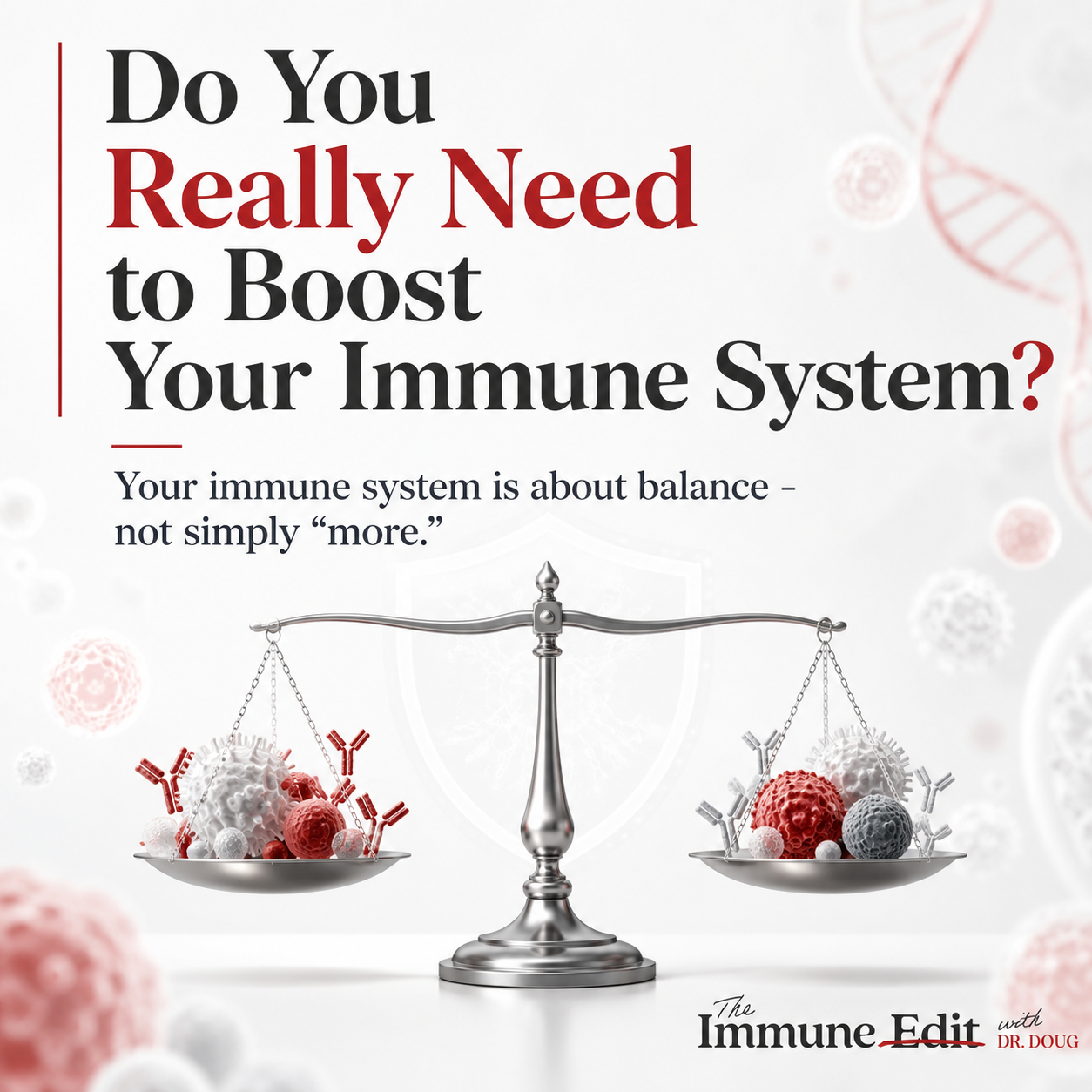
The immune system is one of the most complex systems in the human body. It constantly interacts with the world around us, determines what may pose a threat, and coordinates responses throughout the body.
Yet, despite how much we hear about "immunity," many common explanations reduce this complex system to a simple idea: more immunity must be better.
That is where some of the confusion begins.
From supplements marketed as "immune boosters" to products promising "immune support," it can be difficult to separate genuine immune science from simplified claims and marketing language. Understanding what the immune system actually does—and how its different parts communicate—can help you make more informed decisions about your health.
What Is the Immune System?
The word "immune" has historical roots in the Latin term immunis, which referred to being exempt from a duty or obligation. Over time, the concept became associated with being protected or resistant to disease.
But the immune system is much more than a defense mechanism against infections.
It is also a sophisticated surveillance and communication system that is constantly monitoring the body's interactions with the outside world.
At any given moment, the immune system is assessing its surroundings and responding to questions such as:
- Is this a potential threat?
- Is this something harmless?
- Should this substance be tolerated?
- Does something need to be rejected or removed?
- Does the body need to mount a response?
This continuous surveillance allows the immune system to respond appropriately to changing circumstances.
The Immune System as a Communication Network
One useful way to understand the immune system is to think of it as a communication network.
When the body detects a potential threat, immune cells communicate using a variety of chemical signals. These include molecules such as cytokines and interleukins, as well as antibodies and other components involved in immune responses.
Think of these signals like chemical text messages traveling between cells.
A message may tell another cell to respond, recruit additional immune cells, change its activity, or communicate the information to another part of the immune system.
Not every message produces the same outcome. Some signals activate a response, while others help regulate or limit that response.
This communication is essential because an effective immune system isn't simply one that reacts strongly. It is one that can recognize what requires a response and regulate that response appropriately.
The Immune System Doesn't Work Alone
Another common misunderstanding is viewing the immune system as an isolated system.
In reality, the immune system interacts closely with other major communication systems throughout the body, particularly the nervous system and the endocrine system, which regulates hormones.
These systems continuously communicate with one another.
You can think of the body's communication network as involving three major components:
- Nervous system: communicates through electrical and chemical signals.
- Immune system: communicates through immune cells and signaling molecules.
- Endocrine system: communicates through hormones.
These systems don't operate independently. Their interactions help the body respond to internal and external changes.
This is one reason why thinking about the immune system as something that can simply be "turned up" or "boosted" can be misleading.
Balance Matters More Than "More"
One of the most important concepts in understanding immune health is balance.
The goal isn't necessarily to make the immune system more active. The immune system needs to respond when appropriate, but it also needs mechanisms that regulate and control those responses.
An immune response that is too weak may not adequately address a threat. On the other hand, inappropriate or excessive immune activity can also cause problems.
This is why the question shouldn't simply be:
"How can I boost my immune system?"
A more useful question is:
"How is my immune system functioning, and is it responding appropriately?"
Looking at the immune system as a balanced communication network provides a more accurate framework for understanding immune health.
.png)
Understanding Immune Memory
The concept of immune memory provides a good example of how specific immune responses can be strengthened through exposure.
When the immune system encounters certain infections or vaccines, it can develop immune memory. Specialized immune cells and other components can help the body respond more effectively if it encounters the same threat again.
Antibodies can play an important role in this process, as can memory T cells and other elements of adaptive immunity.
However, immune memory isn't necessarily permanent for every infection or vaccine. The duration and strength of immune protection can vary depending on the specific pathogen, vaccine, and individual.
This is one reason certain vaccines may require additional doses or boosters over time.
What Does an "Immune Booster" Actually Mean?
This is where scientific terminology and marketing language can become confused.
The term "immune booster" is frequently used to describe supplements, foods, beverages, and other products. You may also see phrases such as:
- "Boost your immune system"
- "Immune support"
- "Strengthen your immunity"
- "Supercharge your immune defenses"
These phrases can sound scientific, but they don't necessarily describe a specific measurable medical effect.
A key question to ask is:
What exactly is being boosted?
If a product claims to boost the immune system, it is reasonable to ask what component of the immune system it affects, how that effect is measured, and whether that change actually improves a meaningful health outcome.
Without those details, "immune boosting" can be an overly broad description rather than a precise scientific claim.
Why "Immune Support" Can Be Misleading
The phrase "immune support" can be just as vague.
Supporting what part of the immune system? Through what mechanism? To what degree? And does that change actually improve the person's health?
The immune system contains many different cells, signaling molecules, antibodies, and regulatory mechanisms. Affecting one part of this system does not necessarily mean that the entire immune system has been improved.
This distinction is especially important when evaluating products marketed directly to consumers.
A product may contain an ingredient that affects a particular biological pathway, but that does not automatically mean it "supports immunity" in a way that prevents illness or produces a clinically meaningful benefit.
How Marketing Can Oversimplify Immune Science
The immune system is complicated, but marketing often makes it sound simple.
A product may take one aspect of immune biology and present it as though changing that single component will improve the entire system.
This can create a misleading impression that immune health works like a volume control:
Low immunity → take a product → boost immunity → become healthier.
The actual biology is much more complicated.
The immune system involves multiple interconnected processes that must communicate and remain regulated. Focusing on isolated pieces without considering the larger system can lead to misunderstanding.
This is why being an informed consumer matters.
Questions to Ask Before Buying an "Immune" Product
When you encounter a product advertised as an immune booster or immune support supplement, consider asking:
What exactly is it supposed to change?
Look for a specific explanation rather than a broad claim about "immunity."
Is the effect actually measurable?
A biological effect observed in a laboratory setting does not necessarily translate into a meaningful improvement in human health.
Does the evidence support the claim?
Consider whether there are well-designed human studies supporting the specific benefit being advertised.
Is the claim specific or vague?
The broader the phrase—such as "supports immune health"—the more important it is to understand what the claim actually means.
Do you actually need it?
A product being marketed for immunity doesn't necessarily mean it is appropriate or necessary for you.
Discussing supplements and other products with a qualified healthcare professional can help you evaluate whether they are appropriate for your individual circumstances.
Getting the Immune System Right
Understanding the immune system doesn't require becoming an immunologist.
The most important takeaway is to move away from the idea that immune health is simply about having more immune activity.
Your immune system is a complex surveillance and communication network that works alongside the nervous and endocrine systems. It must recognize potential threats, respond appropriately, communicate across the body, and regulate those responses.
That complexity is precisely why broad promises to "boost" or "support" immunity should be approached thoughtfully.
Instead of asking whether something can make your immune system stronger, ask what it actually does, how it does it, and whether that effect has meaningful clinical value.
A better understanding of the immune system can help you recognize the difference between genuine immunology and simplified marketing—and make more informed decisions about the products and health information you encounter.
.png)
Conclusion
The immune system is far more sophisticated than the simple idea of "strong" versus "weak" immunity. It is a constantly communicating network that monitors the body's environment, identifies potential threats, coordinates responses, and maintains regulation.
Understanding this complexity makes it easier to recognize why terms such as "immune booster" and "immune support" deserve closer examination. Rather than assuming that more immune activity is always better, it is important to ask what a product or intervention actually changes and whether that change has meaningful clinical value.
The more you understand about how the immune system works, the easier it becomes to separate sound immunology from oversimplified health claims—and to make better-informed decisions about your health.
Frequently Asked Questions
What is the immune system?
The immune system is a complex surveillance and communication network that helps the body recognize potential threats and coordinate appropriate responses.
Is a stronger immune system always better?
Not necessarily. Immune health depends on appropriate regulation and balance. The goal is not simply to increase immune activity but to maintain an immune response that is appropriately controlled.
What does "immune booster" mean?
"Immune booster" is commonly used as a marketing term for products claimed to enhance immune function. The phrase itself does not identify a specific immune mechanism or establish that a product provides a meaningful health benefit.
What is immune memory?
Immune memory is the ability of the adaptive immune system to retain information from certain previous exposures, helping the body respond more effectively when it encounters the same threat again.
Do vaccines create immune memory?
Vaccination can stimulate immune responses that include the development of immune memory. Depending on the specific vaccine and disease, additional doses may sometimes be recommended to maintain protection.
Should I take an immune support supplement?
Whether a supplement is appropriate depends on the individual product, its ingredients, the evidence supporting its use, and your personal health circumstances. Broad claims about "immune support" should not automatically be interpreted as proof of a clinically meaningful benefit.